
Soulbound™
What if the only way to save humanity… was to confront God Himself? In Soulbound, you play as a Soulwielder ascending through Heaven to battle angels, confront God, and reopen the Gates of Heaven, sealed in response to humanity’s endless sin. This vertical slice showcases the game’s core mechanics, tone, and aesthetic.
This demo represents an early stage of development. Core systems, mechanics, and features are currently being iterated on and may evolve significantly. For the most up-to-date vision of the project, please refer to the new pitch deck.
Soulbound™ is a registered trademark. All rights reserved.
Game Pitch & GDD
In the process of building this vertical slice, I first created the Pitch Deck to establish the vision and scope of Soulbound. From there, I developed the Game Design Document (GDD) to guide me through the systems, mechanics, and technical requirements that needed to be implemented.
The pitch deck defines the creative direction, including the narrative, the Soul Trigger mechanic, the target audience, and the scope of the vertical slice. The GDD expands this into detailed systems design, level structure, controls, AI logic, and accessibility features, serving as the blueprint for execution in Unreal Engine.
Together, these documents show how I structured Soulbound from concept to implementation, bridging creative vision with technical planning.

Level Design
2D Layout
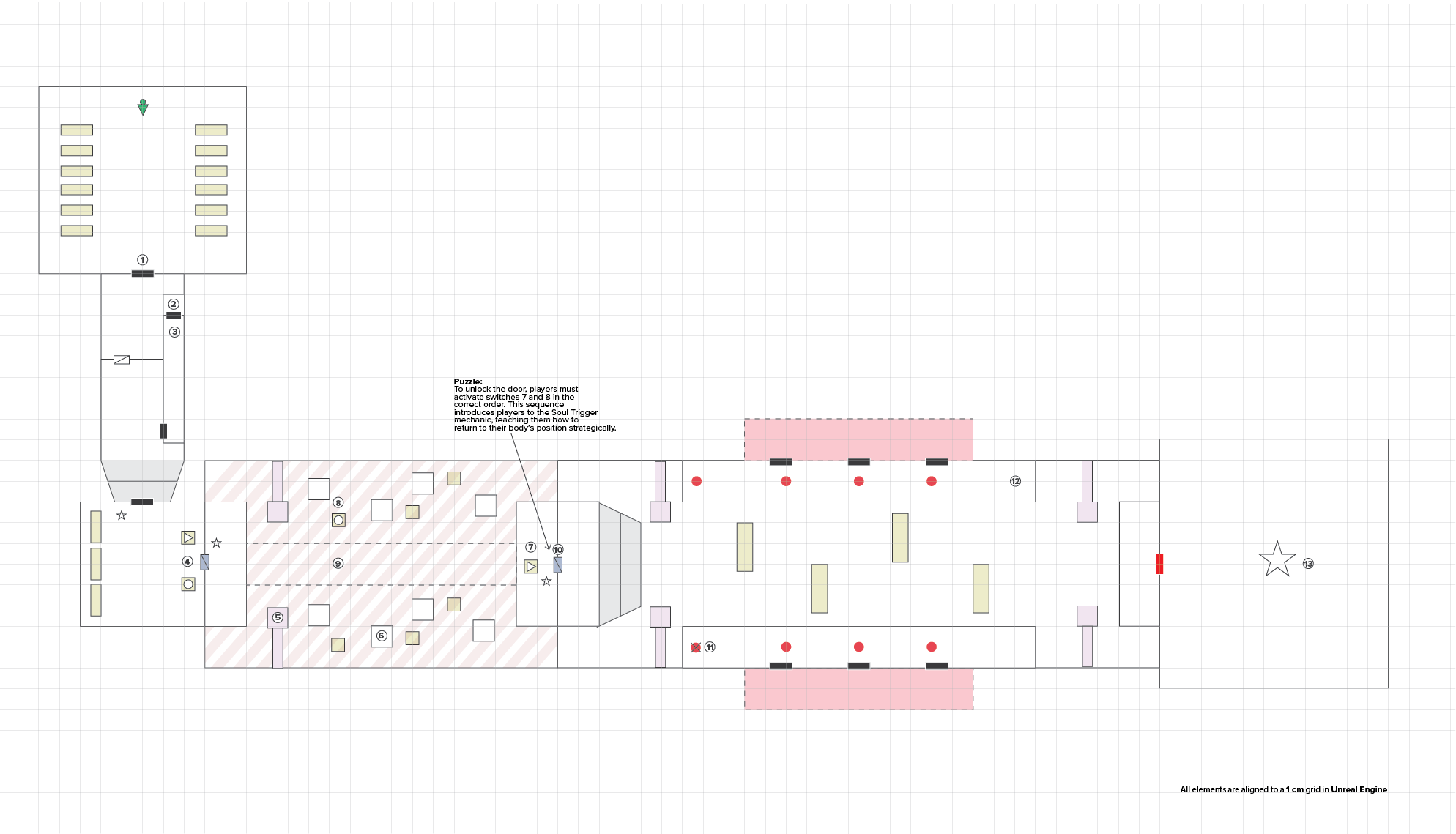
I began the level design process by sketching a 2D layout. The main level, The Abyssal Ascent, was mapped out to define flow, encounters, and puzzle placement before moving into Unreal Engine.
The layout introduces mechanics step by step, starting with simple actions like opening doors and jumping, then gradually layering in Soul Trigger puzzles, combat, and traversal challenges. Players face locked doors, hidden ventilation paths, moving platforms, ranged and melee switches, and eventually a mid-tier boss encounter.
This sketch guided the blockout process in Unreal Engine and ensured that every mechanic in the vertical slice was tied to a clear gameplay teaching moment.
Created in Adobe Illustrator and aligned to a 1 cm Unreal grid for accurate implementation.
3D Blockout
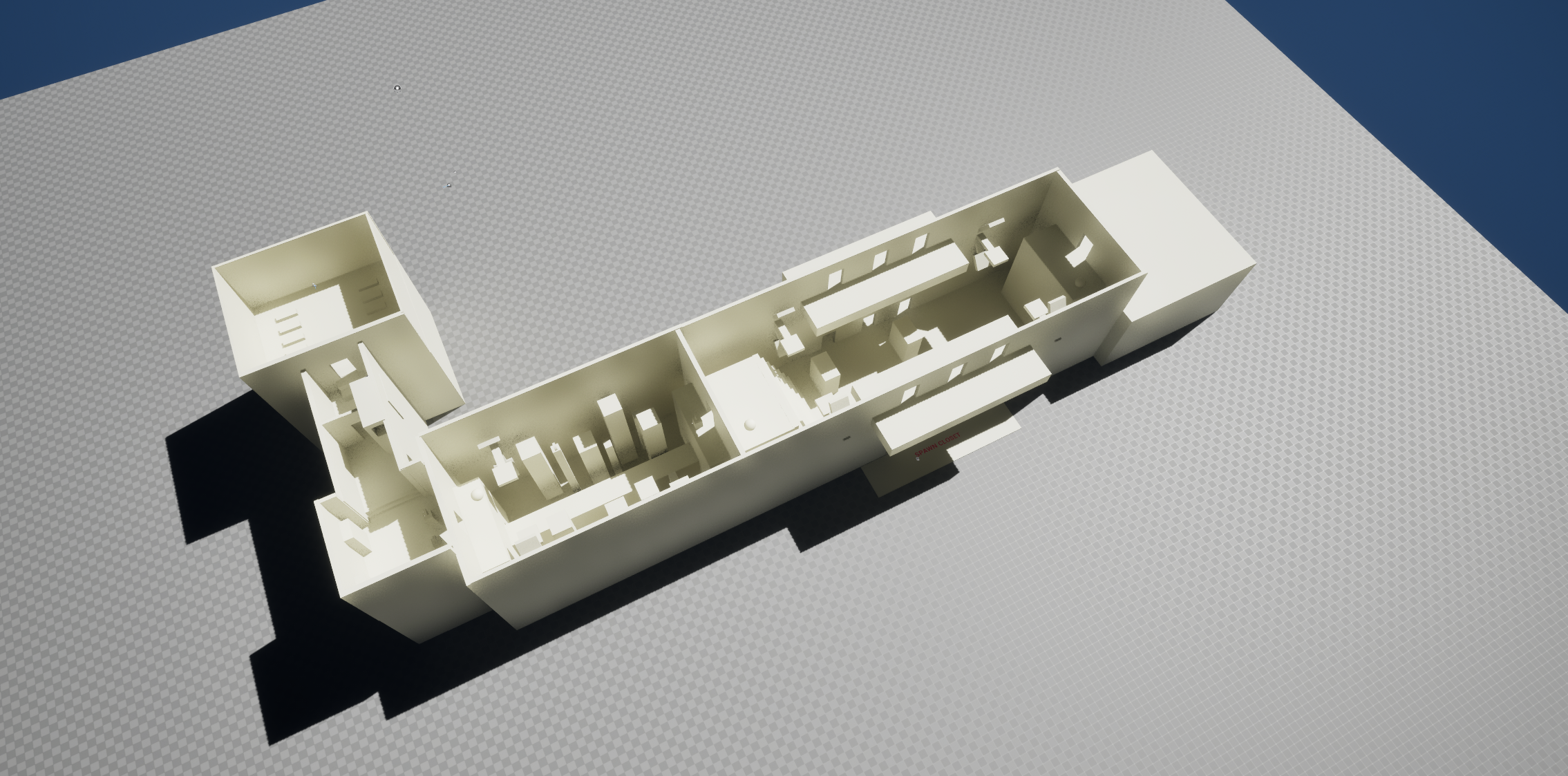
After sketching the 2D layout in Illustrator, I brought the level into Unreal Engine and created a 3D blockout of The Abyssal Ascent. This step transformed the flat design into a playable space, allowing me to test scale, flow, and pacing directly in-engine.
The blockout established room proportions, corridor connections, and puzzle areas, giving a clear visual overview of how the level would function in practice. It served as the foundation for implementing mechanics like Soul Trigger puzzles, combat encounters, and traversal challenges, ensuring that the layout translated smoothly into gameplay.
Built in Unreal Engine as an early blockout to validate scale and player navigation.
Production Plan
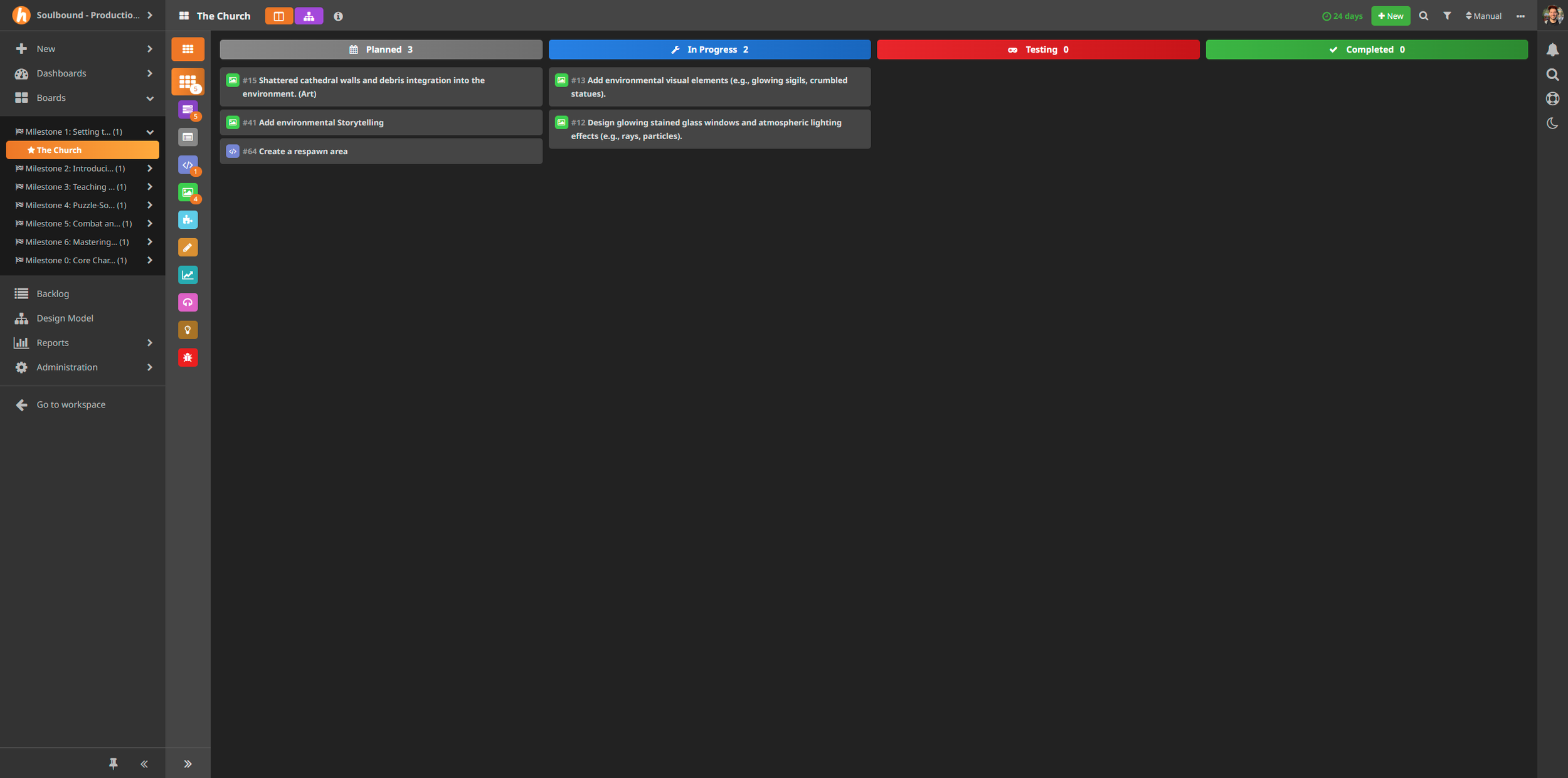
To keep the project organized, I created a production plan using HacknPlan, a tool designed specifically for game development. This allowed me to break the work into clear milestones and manage tasks across the different stages of development.
The plan was structured into categories for tasks that were planned, in progress, in testing, and completed. Using this system helped me track mechanics, level design goals, and polish tasks more effectively, ensuring that the vertical slice could be delivered step by step.
Core Mechanics and Technical Implementations
Puzzle Integration
In this section, players face a locked door with two switches. The first one they see is a shooting switch, but it cannot be activated until the second, interactive switch is pressed manually. This directs players toward the moving platforms to reach the interactive switch.
To reach it, they must slow time with the Soul Trigger while the Soul Gauge drains, allowing them to cross the fast-moving platforms. After pressing the interactive switch, a nearby portal returns them to the start without repeating the platforming. With the interactive switch activated, the shooting switch can now be triggered, and together both switches open the door.
Implemented in Unreal Engine using Blueprint visual scripting
Enemy AI
In this demo, I implemented the core logic for enemy behavior. When the player is detected, the angel enemy spots them and begins to chase, triggering an approach sound that warns the player of incoming danger. This adds both pressure and anticipation to encounters.
Players can also use the Soul Trigger to slow time against enemies, making it easier to attack. However, they must manage the Soul Gauge carefully, since it depletes with use and prevents continuous slowing.
I also integrated basic health and animation states to bring the enemies to life. The character model is a Fab asset that I adapted into the prototype: first tested as a simple blockout, then skinned with the final mesh for visual fidelity.
Implemented in Unreal Engine using Blueprint visual scripting
Boss Arena
For the boss encounter, I scaled up the angel enemy into a larger prototype version to test the feel of a boss fight. I increased its health bar, added new animations, and integrated sound design to give the boss more weight and creepiness.
This is an early prototype, focused on visual impact and presentation within the vertical slice. While the boss currently does not attack, the intent for future iterations is to expand its behavior into a full combat encounter.
Implemented in Unreal Engine using Blueprint visual scripting
The Plot
Condemning humanity for its sins, God sealed the Gates of Heaven, trapping countless souls in an endless limbo. Only a rare few, known as Soulwielders, can perceive and interact with these lost spirits.
You play as Vesper Godfrey, a Soulwielder driven by the loss of his younger brother Elior, who vanished into Limbo. In his grief, Vesper joined the secretive Soulbound Order, a faction that unearthed the forbidden Soul Arts, a power that allows Soulwielders to separate body and spirit, wield angelic weapons, manipulate time, and defy the divine.
Guided by Elior’s lingering spirit, Vesper sets out for a distant, crumbling church said to house a portal to Heaven. There, he will wage war against angels, unravel sacred lies, and confront God to reopen the Gates of Heaven and reclaim the souls He has forsaken.

New Vertical Slice In Development
The next vertical slice of Soulbound is currently in development. This version builds on the original demo with new mechanics, expanded story elements, and significant updates to the art direction.
I am leading a small team to bring this phase to life, focusing on refining combat, traversal, and narrative integration. The updated pitch deck highlights these changes and outlines the new direction for the game.
Behind the build
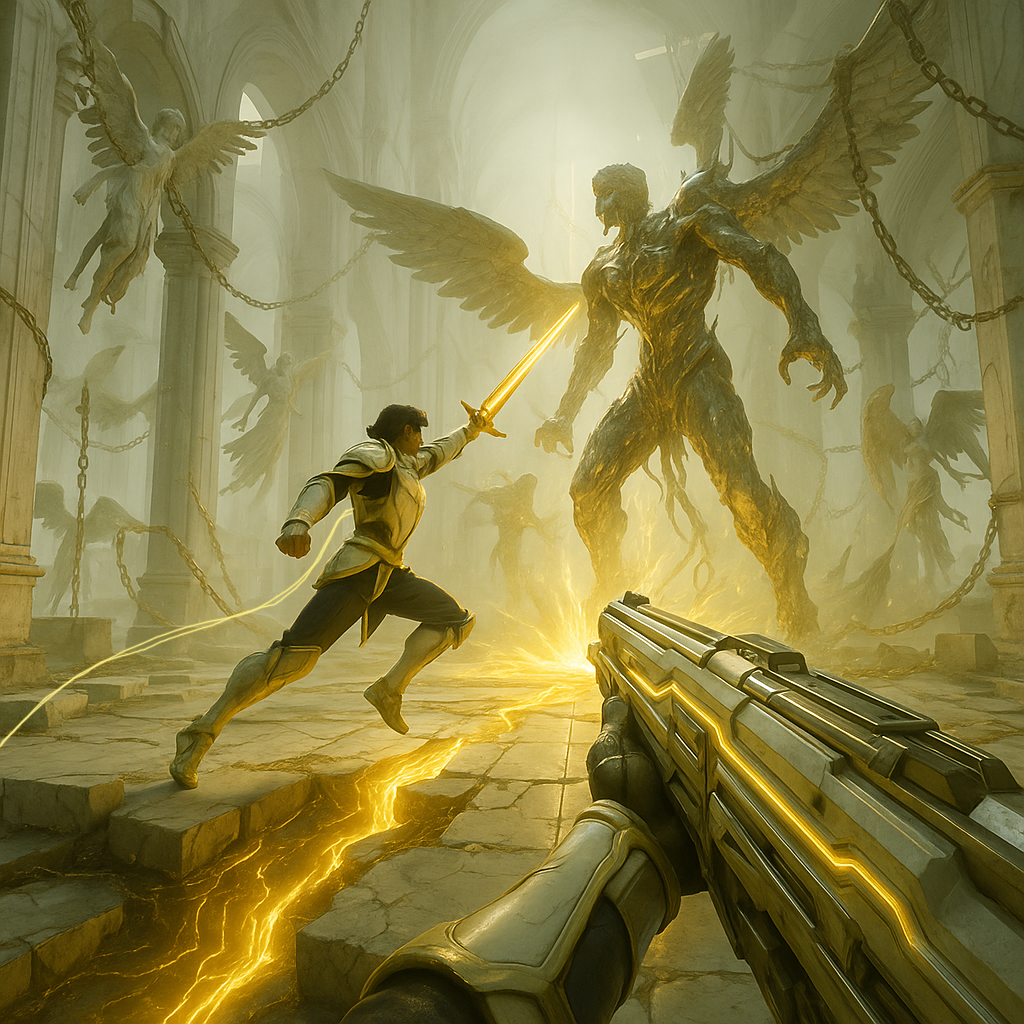
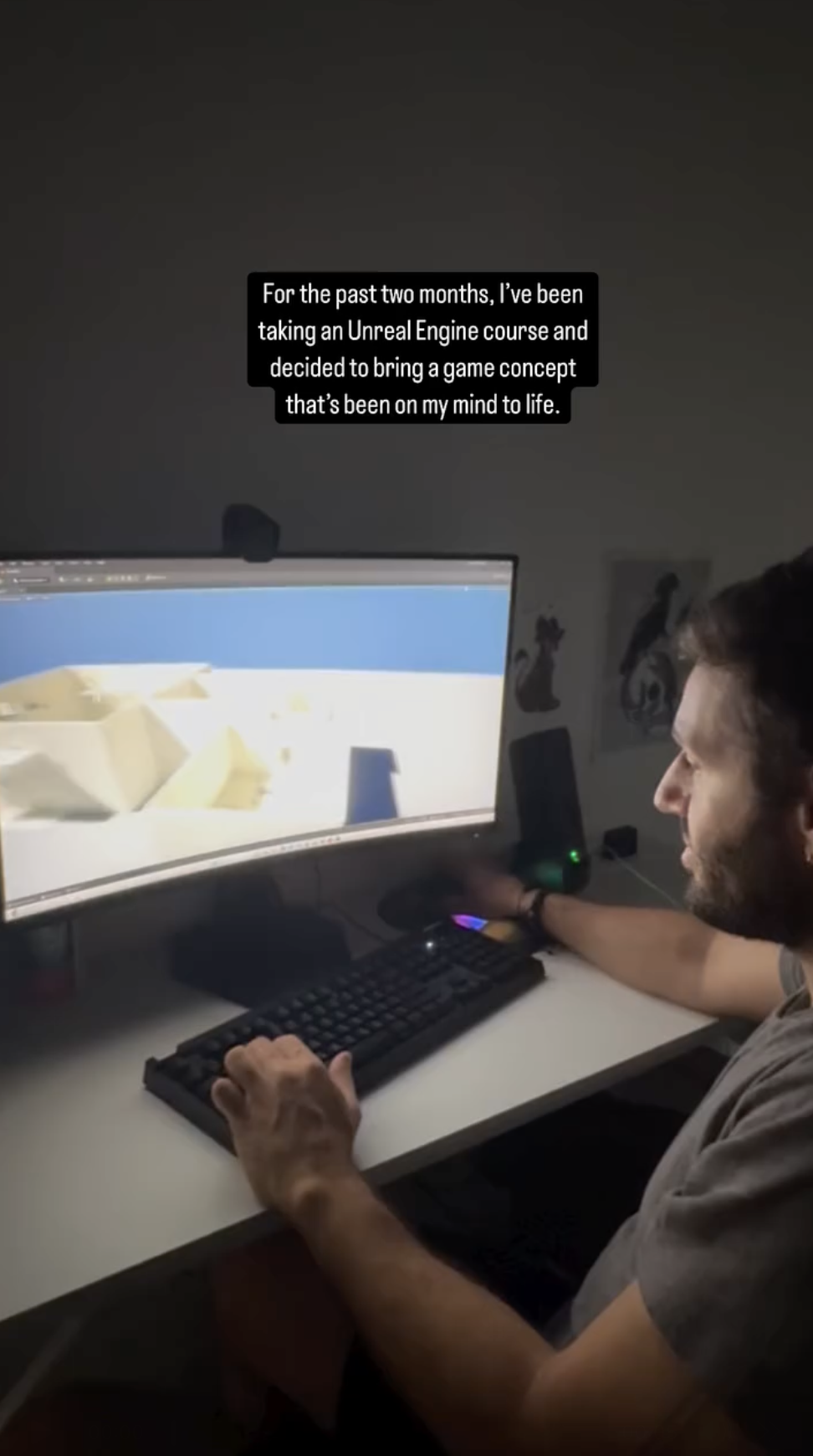
This section features a visual breakdown of Soulbound's creation, originally shared as an Instagram Story. It captures the full development journey from initial sketches to environment building, animation, and final implementation, and ends with work-in-progress concept art that will be integrated into the game.
Alongside this process, I was recognized as a top performer in the Game Design course at ELVTR.Cameron Williams (Senior Mission Designer II, Absurd Ventures) highlighted my ability to develop a unique core game concept, iterate effectively through feedback, and deliver a polished prototype in Unreal Engine 5.
My Role in the Videogame
〰️
My Role in the Videogame 〰️
Game Design & Direction – Led the overall creative vision of Soulbound, defining the game’s mechanics, tone, and core narrative while overseeing the integration of gameplay systems.
Art Direction – Developed the visual identity of the game, including the cathedralpunk aesthetic, UI concepts, and environmental design direction.
Narrative Design – Wrote the central storyline, character arcs, and in-game lore, shaping the emotional and mythological foundation of the player experience.
Level Design – Designed the vertical slice level layout and progression, balancing combat, traversal, and puzzle mechanics to showcase core gameplay.
Team Leadership – Assembled and currently lead a volunteer team of developers and designers, managing collaboration, documentation, and production milestones.
Marketing & Pitch Development – Created the pitch deck and promotional materials to communicate the game's vision to publishers and studios.